
From “Oh Okayyy” to “Okay, got it!”
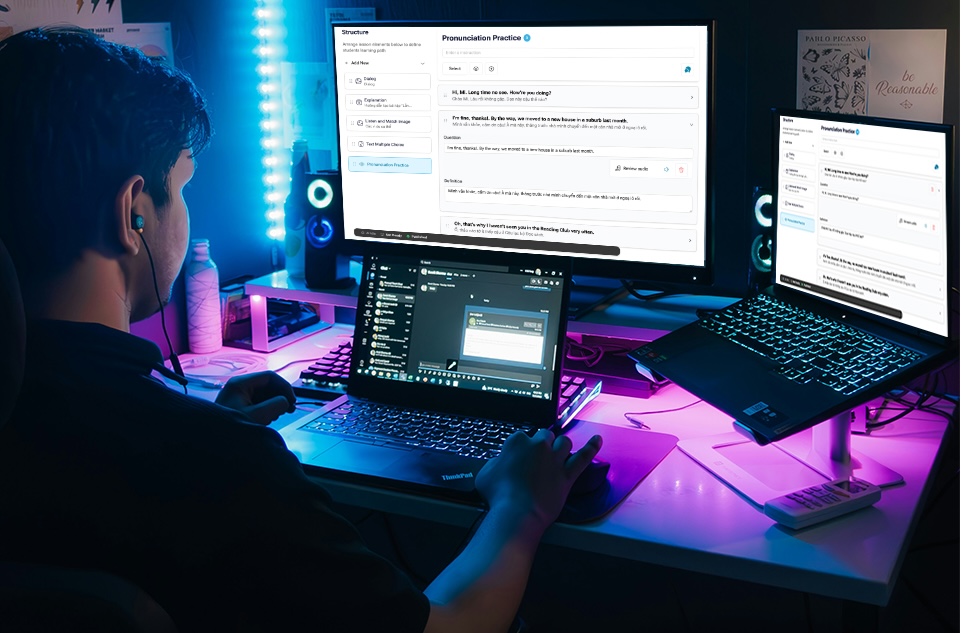
From cents per view to dollars per engagement
There are countless language learning videos and millions of viewers watching them.
But here is the uncomfortable truth:
Views do not equal learning for the user and views do not mean real income for the creator.
The user watches the video and then forgets the content. It’s really just a little feel good brain candy. Meanwhile, the creator earns maybe 2 cents from the view. In other words, language learning videos are lamentably low impact for both user and creator.
This old world, a world of ineffective somewhat random brain stimulation and inconsequential income for creators is coming to an end.
The new world is a world of real learning value delivered through real learning journeys. And these learning journeys will be crafted by real human educators earning real income. They provide reachable learning destinations, say, a business meeting accomplished, an interview passed, or perhaps a cooking demonstration understood.

1. The Changing Behaviour of Language Learners (Gen Z & Gen Alpha)
To understand why the “video-only” model is failing, we have to look at who is watching. Gen Z and Gen Alpha are not just “digital natives”; they are “efficiency natives.”
These generations consume information differently. They reject the traditional, hour-long lecture format in favor of micro-learning—short, punchy bursts of information. However, unlike previous generations who might have been content with passive TV watching, Gen Z demands agency. They are used to swiping, tapping, and manipulating their digital environment.Recent research backs this up. According to studies on educational technology adoption, approximately 60% of Gen Z students are openly supportive of AI tools for language learning, recognizing that technology can offer the personalization that traditional methods lack.
Key insights on this demographic:
- They want “Just-in-Time” learning: Learning a specific phrase right before they need to use it.
- They expect feedback: They don’t just want to watch; they want to know if they are doing it right.
- They trust creators over institutions: They would rather learn from a favorite personality than a faceless textbook company.
The Implication: If you are only giving them a video to watch, you are worth maybe a cent or two to the viewer. If you take the viewer to their learning destination, you are worth dollars.
2. From Viewer to Learner
So, what is the solution? It is the Content-to-Learning Shift.
This means taking that video you made and expanding it into a complete learning loop. Instead of the experience ending when the video stops, the video becomes the introduction to an interactive module.
The Anatomy of an Interactive Shift:
- The Hook : Your video engages the viewer.
- The Action : The learner completes a few light activities, perhaps true or false or matching or multiple choice to learn vocabulary or language structures.
- The Application : The student practices pronunciation, then making sentences themselves, then converses on the topic of the video.
- The Loop : Forgetting is fine. Mispronunciation is fine. They simply get to practice again later.
3. Why Now?
A couple of years ago, the interactive shift would have been impossible. Just making a quality video takes a lot of time, Creating an entire customized learning environment to support the video would be an impossible workload.
We are now in a very different world, a world where the “grunt work” is done for us automatically. Our contribution is now the human creativity and expertise that brings real value to the learner. This value is already in the video you have created. All you need to do now is lightly edit the interactive content and perhaps, if you so desire, add a few activities yourself.
4. Why Creators Stand to Gain
You might be thinking, “I’m a content creator, not a school. Why should I do this?”
The answer is simple: Sustainability and Monetization.
The creator economy is volatile. Ad revenue fluctuates, and algorithms change. But selling outcomes—actual language proficiency—is a stable business model.
- Higher Perceived Value: People pay for results.. A $50 course that “Guarantees you can order food in Italian” is a no-brainer. Plus, it really is a guarantee. Completing the course is an achievable, low effort task for the learner and by definition, completing the course will ensure achieving the learning goal including real speaking ability.
- Trust and Authority: When your followers actually learn to speak because of you, you transition from an “entertainer” to a “mentor.” This deepens loyalty.
- Asset Ownership: When you build a course, you own the asset. You aren’t renting space on an algorithm.
5. Presenting Immersio as the Solution
Feed Immersio your video content or text, and we generate a relevant interactive, adaptive, learning journey, a journey from light, short learning activities, to simple language production and then on to actual on topic conversation.
You can monitor and support the students learning journey on our platform
You provide real value with a real online learning journey
You can also engage the student more deeply through online group or individual face to face lessons.
“Using AI isn’t enough anymore. That was the 2024 playbook. In 2026, the people who win won’t just be using AI. They’ll be building with it.”